Bosnia and Herzegovina
Trebinje.
13 places
1 photos
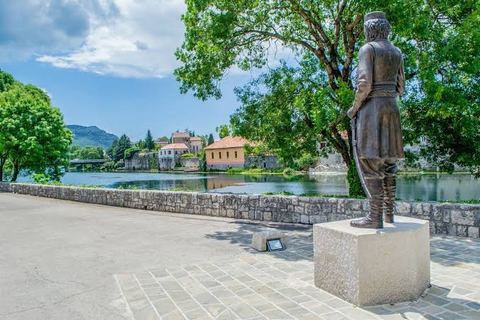
Trebinje is the southernmost, sunniest and most picturesque town in Bosnia and Herzegovina (Republika Srpska), set on the banks of the clear Trebišnjica River just 30 kilometres from the Adriatic coast and Croatia's Dubrovnik. The town is known for its mild Mediterranean climate, centuries-old plane trees, winemaking traditions and a special unhurried atmosphere.
Trebinje is famous for the arched Ottoman Arslanagić Bridge, old Orthodox monasteries, a cosy Old Town with an Austro-Hungarian legacy and its status as the wine capital of Herzegovina.
Trebinje is often called the country's most Mediterranean town: it has more than 260 sunny days a year, and the air smells of figs, cypress and the sea. The main attraction in the centre is the square under the canopy of 16 giant centuries-old plane trees (Platani), planted back in the Austro-Hungarian era. In their shade is the town's main café, a lovely place for morning coffee while you watch town life go by.
How to get to the city
01By public transport
⚬ Bus: Regular services connect Trebinje with Mostar, Sarajevo and Belgrade, as well as the coastal towns of Montenegro and Croatia.
⚬ Price: Bus from Mostar — about 15–20 BAM (8–10 EUR) one way.
⚬ ⚠️ Tip: If you're coming from Dubrovnik or Montenegro, allow for possible queues at the road border crossings in summer.
One of the main architectural masterpieces of the Ottoman period in Herzegovina is the Arslanagić Bridge (Arslanagića most), built in the 16th century on the orders of Mehmed Pasha Sokolović. The graceful stone bridge with twin arches and a watchtower spans the emerald Trebišnjica, creating one of the region's most recognisable postcard views.
What to see
01Arslanagić Bridge
A 16th-century Ottoman stone bridge with a unique arch design and a flawless reflection in the water.
02Hercegovačka Gračanica Monastery
An Orthodox monastery complex on Crkvina hill with the best viewpoint over the whole town and valley.
03Plane Tree Square
The soul of Trebinje — a summer terrace in the shade of 16 huge plane trees and a traditional morning farmers' market.
04Tvrdoš Monastery
An ancient working monastery with 15th-century wine cellars where tastings of the monastery's wines are held.
05Kastel Old Town
The historic core inside the fortress walls, with Ottoman architecture, a clock tower and quiet lanes.
06Jovan Dučić Park
A spacious green town park with fountains, sculptures, the Cathedral of the Transfiguration and shady alleys.
07Museum of Herzegovina
A museum in an old Austrian barracks building with rich archaeological, ethnographic and art collections.
08Trebišnjica River and old water mills
The embankment of one of the longest sinking (karst) rivers in Europe, with ancient water wheels once used to irrigate the fields.
09Vukoje Winery
One of the region's best-known premium wineries, with a panoramic restaurant and a wine gallery complex.
Trebinje is an important spiritual centre. On the high Crkvina hill above the town stands the Hercegovačka Gračanica monastery, with a breathtaking view over the whole valley. And a few kilometres from town is the ancient 16th-century Tvrdoš Monastery, known not only for its history but also for its centuries-old wine cellars, where the monks make one of the best wines in the Balkans.
Where to stay
The countryside around Trebinje is a winemaking centre where the native grape varieties Vranac (a rich red) and Žilavka (a fresh white) are grown. The town is surrounded by family wineries, and at the local market under the plane trees you can buy the famous cheese aged in a sack (sir iz mijeha), pršut, mountain honey and fresh olive oils.
Where to eat
01Restoran Tarana Stari Grad
A characterful place inside the Old Town walls with traditional Balkan food: juicy grilled meat, lamb cooked under the peka and trout.
Places map
What to see
Where to stay
Where to eat
Additional info
Practical information and history
⚬ The region's climate capital: Trebinje is officially considered one of the sunniest towns in the Balkan Peninsula (more than 260 sunny days a year). Thanks to its closeness to the sea, it has a special Mediterranean microclimate in which plane trees, oleanders, figs and citrus trees thrive.
⚬ Austro-Hungarian traces: After the Ottoman period the town came under Austro-Hungarian rule. It was the Austrians who, in the late 19th century, laid out the famous Plane Tree Square, built barracks and fortifications on the surrounding hills and created a regular town plan beyond the Ottoman Kastel.
What else to add to your plans
⚬ Vjetrenica Cave: About 50 km from Trebinje lies the largest and best-known cave in Bosnia and Herzegovina, on UNESCO's World Heritage tentative list. It is famous for the constant cool winds at its entrance, ancient rock drawings and rare fauna (including the "human fish" — the olm).
⚬ Duži Monastery (Manastir Duži): A beautiful 16th-century Orthodox monastery 10 km from the town in the Popovo Polje valley. In the 18th century it served as the residence of the metropolitan; today it draws visitors with its quiet, well-kept gardens, historic relics and its own tradition of making olive oil and honey.
Mobile data in Bosnia and Herzegovina
eSIM — no need to find a phone shop
- Install before you fly, turn on when you land
- Keep your own SIM for calls and texts
Author's referral code · purchase on the Airalo website
Where to stay in Trebinje
Hotels and apartments with prices and reviews
- Prices for any dates at once
- Guest reviews and a hotel map
Author's partner link · booking on the Trip.com website
Photos